Did you know the University of Missouri ships more than 60 tons of hazardous, biological and radioactive waste for disposal each year? Much of this waste is generated through Mizzou’s research and teaching activities.
The creation of waste is a normal part of research operations. From advancing medical treatments to developing new technologies and studying environmental processes, researchers routinely work with specialized materials that become waste after use.
Proper handling and disposal ensure these materials are managed safely and responsibly while supporting scientific progress.
“Proper waste management isn't just about compliance,” said Nathan Holtmeyer, technical services professional with Environmental Health & Safety (EHS). “It's about creating a safer Mizzou.”

For researchers, properly managing waste is about more than meeting safety requirements. It helps maintain organized laboratories, frees up valuable workspace, reduces the risk of accidents that could interrupt experiments and prevents costly disposal complications.
"A few simple practices can save researchers time, protect their work and allow them to focus on what matters most, which is research and discovery,” Holtmeyer said.
EHS works with researchers across campus to ensure hazardous waste is properly identified, labeled, stored and collected. While EHS coordinates the collection and disposal process, proper waste management begins with the researchers who generate it.
Holtmeyer said one of the most important steps is ensuring every hazardous waste container has a completed green Hazardous Waste Label (HWL) provided by EHS. The label identifies the chemicals in the container, their associated hazards and the date waste accumulation began.
Labels should be completed when waste is first added to a container and updated as necessary to accurately reflect its contents. Accurate labeling also saves researchers time by eliminating the need to identify unknown chemicals later, which can result in costly waste characterization and disposal delays.
Proper storage is equally important. Waste containers should remain securely closed except when adding waste, be compatible with their contents and be stored away from incompatible materials. These simple practices help prevent spills, accidental chemical reactions and unnecessary exposure to laboratory personnel. They also reduce the likelihood of incidents that could interrupt experiments, damage equipment or disrupt laboratory operations.
Researchers also need to pay attention to how long waste remains in their laboratories. Under Mizzou policy, hazardous waste must be collected by EHS within six months of the accumulation start date.
Laboratories are encouraged to request pickups well before that deadline or whenever containers are full or no longer needed. Regular waste removal helps researchers reclaim valuable bench and storage space, maintain organized work areas and avoid unnecessary accumulation of hazardous materials.
Fortunately, requesting a pickup is straightforward. Researchers can log in to EHS Assistant (EHSA) using their Mizzou credentials and submit a Waste Pickup Request identifying the materials ready for collection. EHS personnel then coordinate the collection and proper disposal of the waste. Laboratories also can request additional waste labels and containers through EHSA.
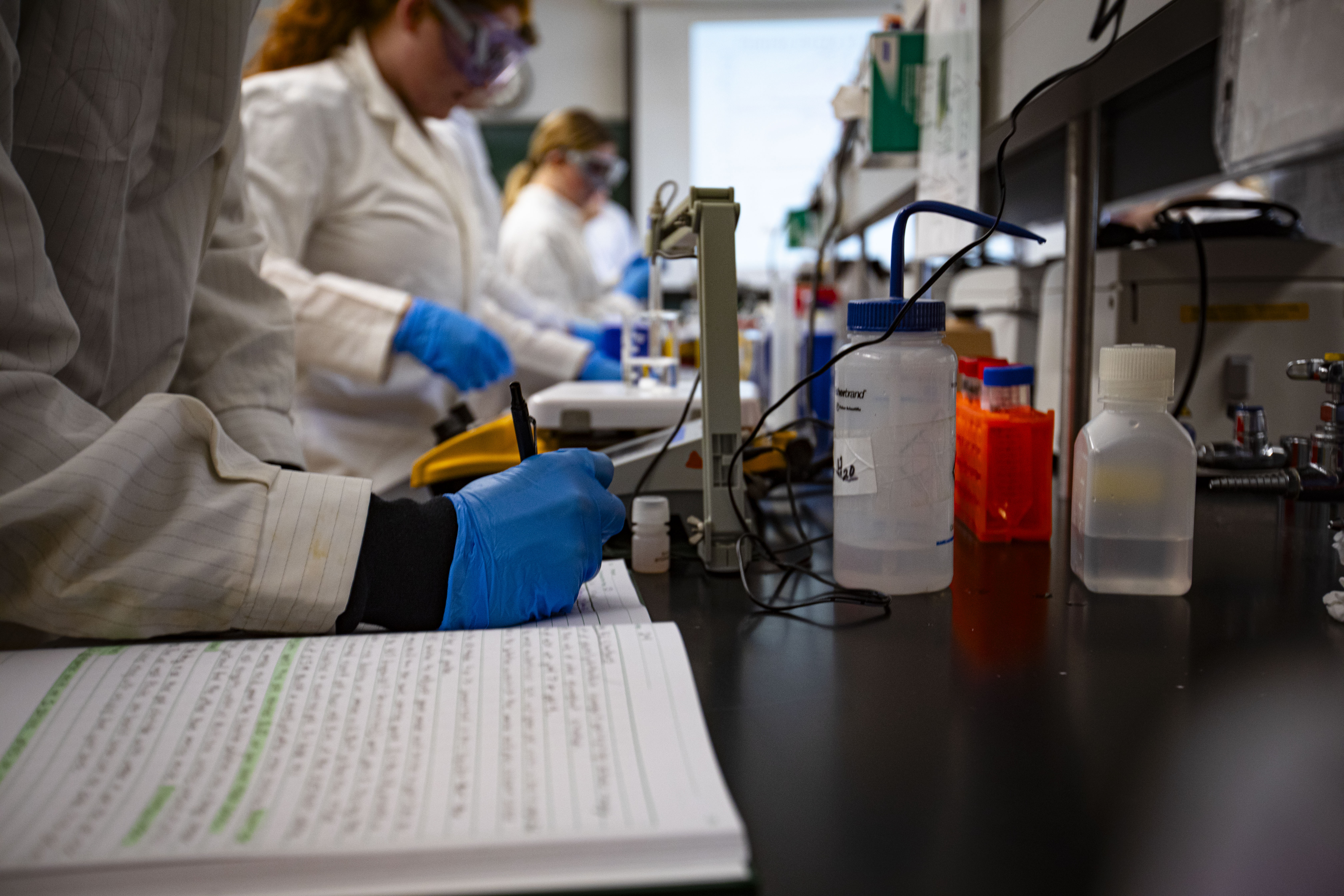
Proper labeling helps EHS personnel identify hazards before handling waste, while timely pickup requests reduce chemical accumulation, prevent unnecessary disposal costs and keep laboratories ready for inspections.
“We encourage all researchers, graduate students and laboratory personnel to take an active role in managing the waste generated through their work,” Holtmeyer said. "It’s a team effort. These everyday practices make a significant difference.”
If you have any questions about whether something is a hazardous waste or about the best practices for managing hazardous waste, contact the Hazmat Services Team at 573-882-3736 or hazmat@missouri.edu.
For additional guidance, visit the EHS Chemical Labeling webpage or contact Environmental Health & Safety at 573-882-7018.