At the University of Missouri, groundbreaking research happens every day. And behind many of these discoveries is a strong commitment to safety, sustainability and smart laboratory management. One example can be found in the lab of Kiruba Krishnaswamy, associate professor in the College of Engineering and the College of Agriculture, Food and Natural Resources.
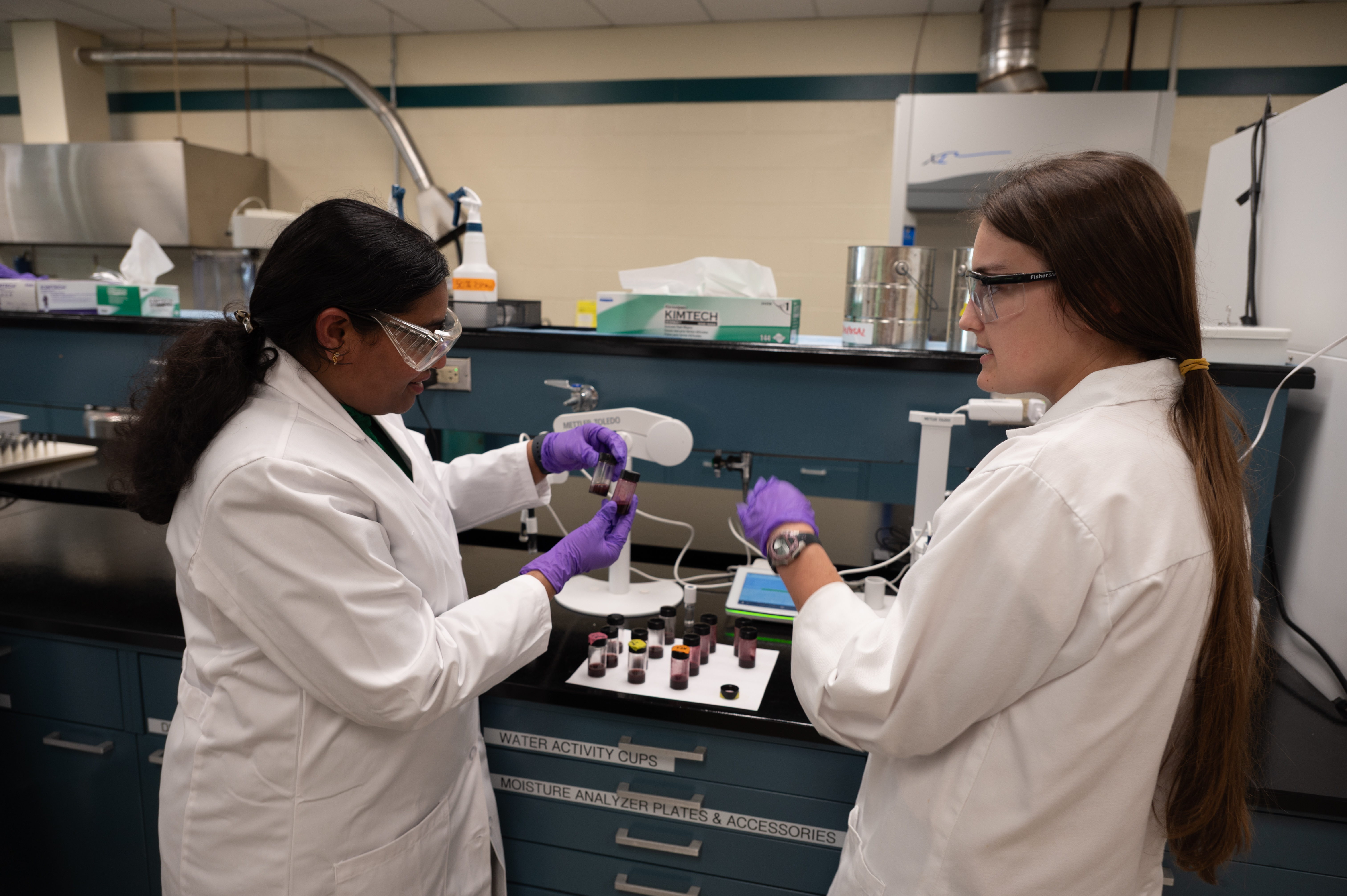
Krishnaswamy leads the Food Engineering and Sustainable Technologies (FEAST) Lab, where students study engineering, food science and human health challenges.
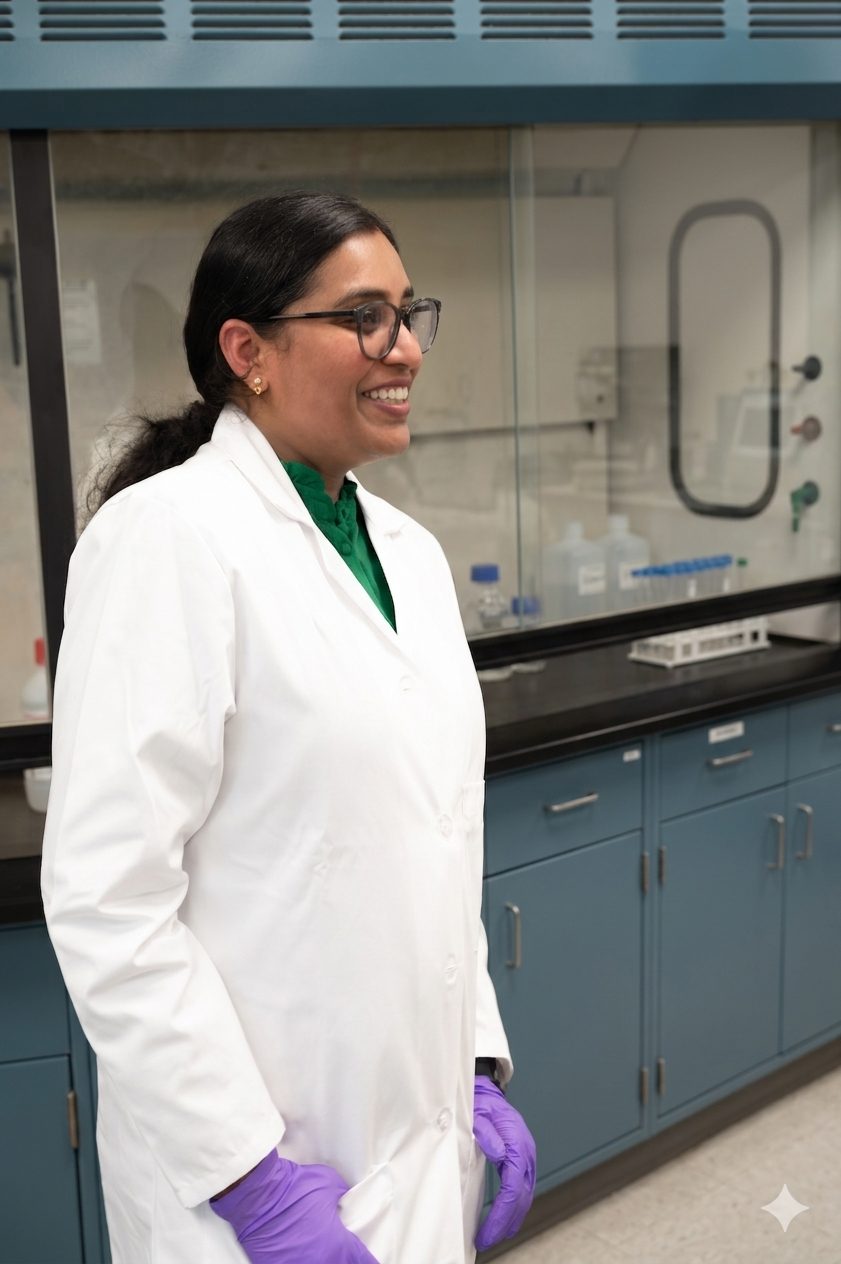
Her interest in food science began long before she entered a research laboratory. As a child in India, Krishnaswamy visited a chocolate factory and became fascinated.
“I wanted to see how chocolate was made,” Krishnaswamy said. “I have always been a foodie, and that curiosity about food stayed with me.”
Her childhood curiosity developed into a professional calling during her undergraduate studies, when she participated in an international research program focused on food and nutrition security. The experience helped her see how engineering could be used to address meaningful societal challenges.
“That experience showed me that you can use engineering principles to solve real-life problems,” she said. “I realized that I loved science and engineering, but I also loved the social purpose behind the work.”
That realization took Krishnaswamy from India to Canada and eventually to the United States. Today, she gives students in the FEAST Lab opportunities to make similar connections between scientific discovery and real-world impact.
“Our lab brings together students from different disciplines because the problems we are trying to solve sit at the intersection of all of them,” she said. “We need young minds thinking together about how to solve these problems.”
Housekeeping excellence supports safe science
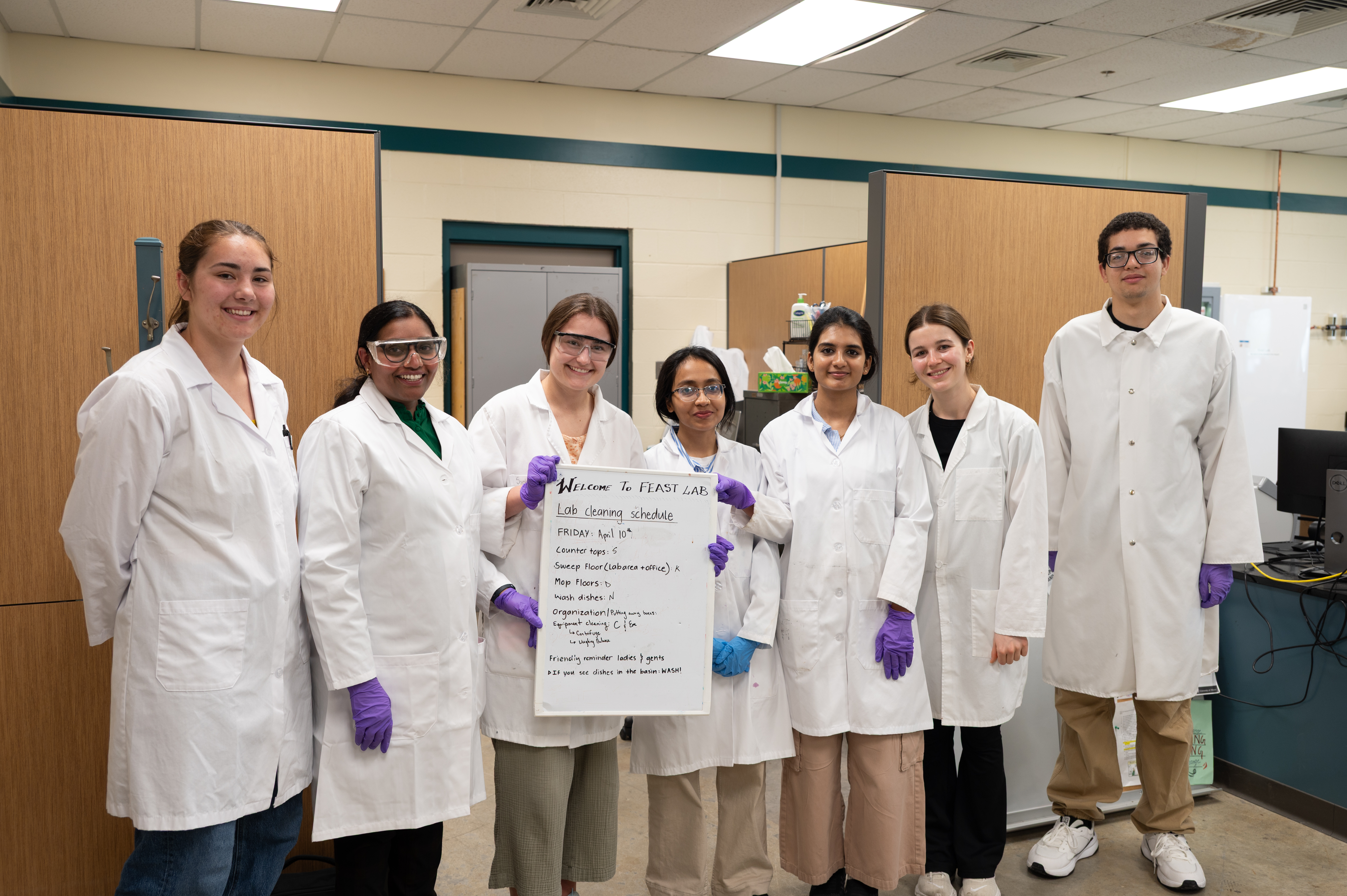
Equally impressive is the FEAST Lab’s commitment to housekeeping and workspace organization. The lab stands out for its clean benches, organized storage areas, clearly defined work zones and uncluttered pathways that help promote both safety and productivity.
Rather than relying on occasional cleanings, the research team maintains a weekly chore list with assigned routine responsibilities. This proactive approach keeps the facility in pristine condition.
Laboratory problems that are common elsewhere, such as overcrowded benches, unmanaged waste, broken glass, unlabeled materials and blocked work areas, are absent in the FEAST Lab. Researchers applaud the lab for being a professional environment where they can focus on high-quality, repeatable science.
Students recognize the value of that structure in their daily work.
“It’s so easy to start an experiment and know where everything is,” one student shared during the visit. “We have everything labeled.”
Smart resource use
A strong inventory management system and good housekeeping also support the FEAST Lab’s broader sustainability mission. By knowing what materials are already available, the team minimizes unnecessary purchases, reduces waste and makes better use of existing resources.
The lab also benefits from chemical redistribution resources coordinated through Mizzou Environmental Health & Safety (EHS).
“When we started the lab, we had limited resources,” Krishnaswamy said. “We turned to the available resources through EHS, and an entire research project was built using glassware and chemicals obtained through the chemical redistribution program. That project ultimately led to a published paper.”
Teaching the next generation
The FEAST Lab serves as a training ground for future scientists and engineers. Students learn that successful research depends not only on technical knowledge, but also on organization, accountability, hazard awareness and responsible stewardship of laboratory resources.
The sound habits students build through the lab will benefit them throughout their careers.
Driving great discoveries
Krishnaswamy’s research is helping address major global food systems challenges, but behind that innovation is a laboratory culture built on planning, teamwork and strong operational systems.
The FEAST Lab demonstrates that chemical inventory management and outstanding housekeeping are cornerstones of safe, efficient and sustainable research excellence.
“Laboratories like the FEAST Lab make us proud because they exemplify the principles of safe science,” said Chris Pearman, assistant director of Environmental Health & Safety. “Their commitment to organization, accountability and responsible stewardship demonstrates that safety and sustainability are not barriers to discovery. They are essential to research excellence.”