Article by Chris Pearman
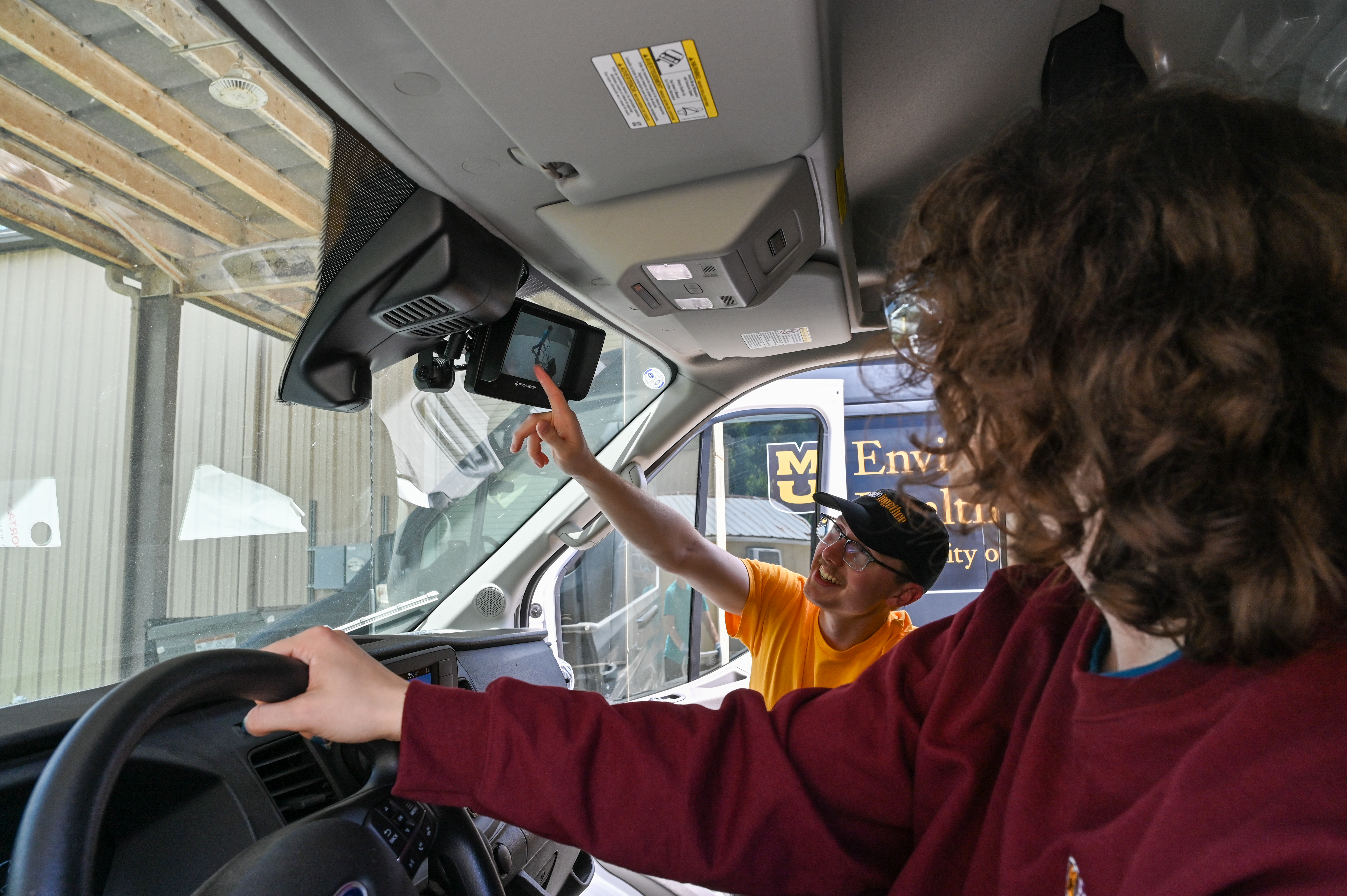
Environmental Health & Safety recently outfitted several hazardous waste pickup vehicles with 360-degree camera systems to improve driver awareness and reduce risk during campus service operations. This investment strengthens the safety of a critical service that supports Mizzou’s research, teaching and campus operations.
Hazardous waste pickup is an essential behind-the-scenes service that directly supports the university’s research and academic mission. Each week, EHS staff collect regulated waste from research laboratories, teaching labs, clinical areas and other campus operations so that faculty, staff and students can continue their work safely and efficiently. Timely waste removal helps laboratories maintain safe workspaces, prevent the accumulation of unwanted chemicals, support regulatory compliance and remain focused on discovery, innovation and education.
Because this work occurs across a large and active campus, EHS hazardous waste vehicles must often maneuver through tight service areas, loading docks, parking lots, sidewalks and building access points while pedestrians, cyclists, scooters, delivery vehicles and campus traffic are nearby. This creates an especially hazardous operating environment. Unlike many fleet operations that primarily travel on public roads, campus service vehicles frequently move through areas with high pedestrian density, unpredictable foot traffic, distracted walkers and limited separation between vehicles and people.
The risk is even greater when vehicles must back up, turn around or position near building entrances and loading docks. In these situations, even a small blind spot can create a serious hazard.
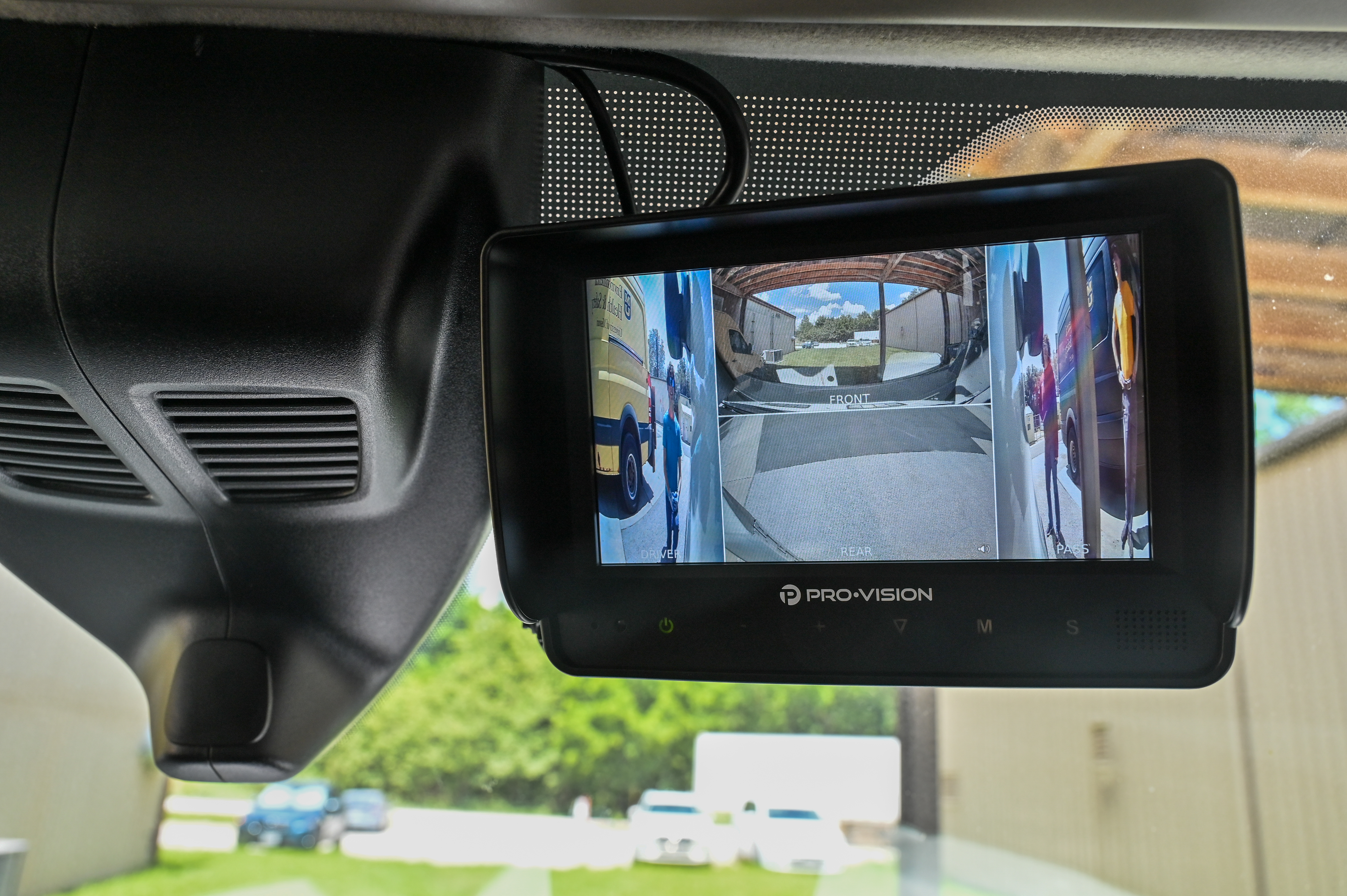
The new camera systems provide drivers with a broader view around the vehicle, helping them identify pedestrians, cyclists, scooters, parked vehicles, curbs, bollards, loading dock edges and building features before moving. The four camera views supplement mirrors and direct observation, giving drivers another tool to make safer decisions in crowded or confined areas.
For the research community, this technology helps protect both people and continuity of service. A vehicle incident involving hazardous waste could delay pickups, interrupt access to a research building or loading dock, damage shared infrastructure, remove a service vehicle from operation or create a hazardous material response situation.
From a risk management perspective, this improvement supports injury prevention, environmental protection and responsible stewardship of university resources. These vehicles are not simply transporting routine materials—they are moving regulated hazardous waste generated through research, instruction and campus operations. Preventing vehicle incidents also reduces the potential for spills, container damage, property damage, emergency response costs and operational downtime.
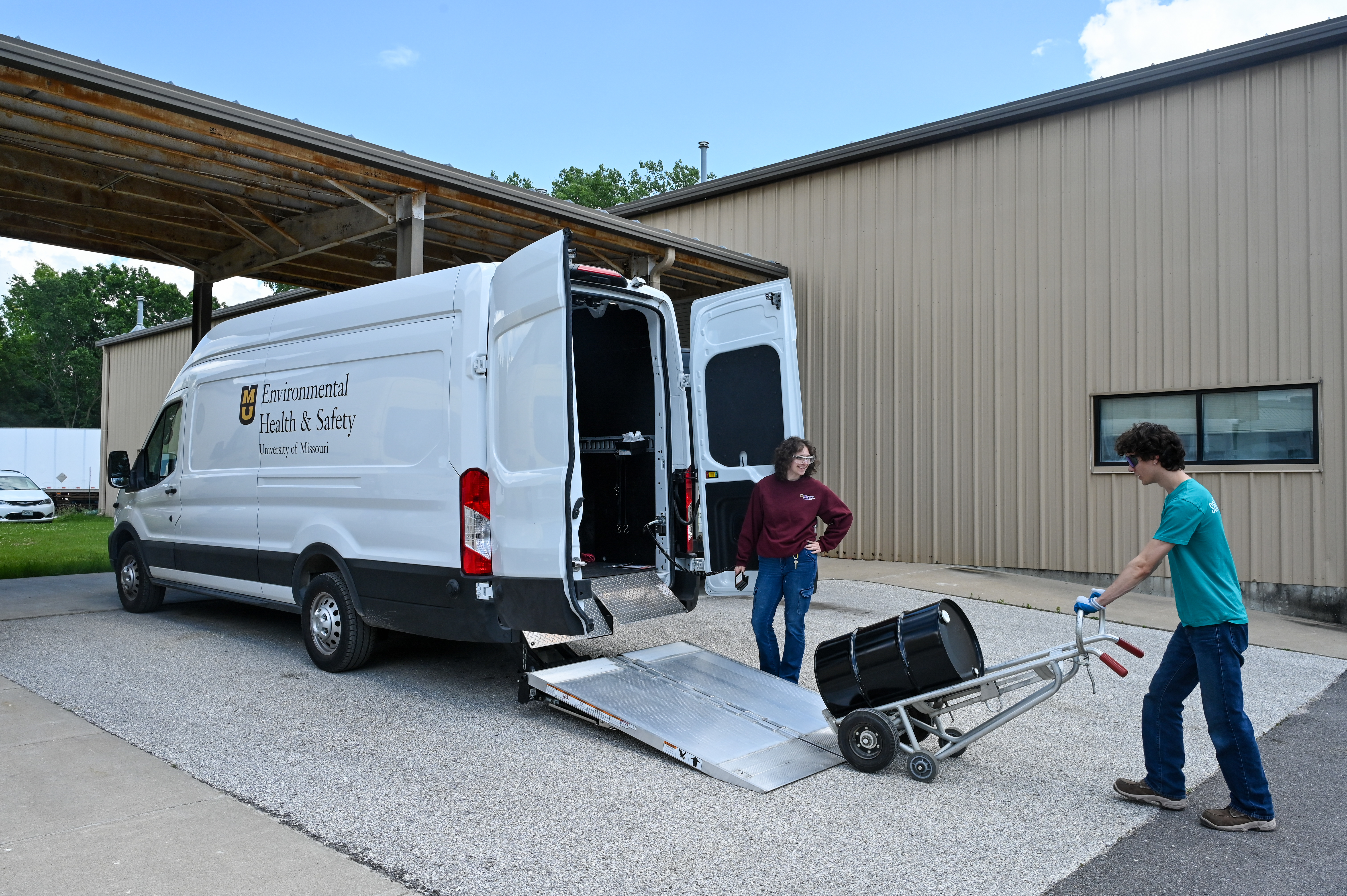
The vehicle cameras are one component of a broader hazardous waste management process. EHS staff evaluate waste requests, coordinate pickups, handle and secure containers, transport materials and prepare them for proper disposal. Each step is designed to protect employees, the campus community and the environment while supporting the university’s research and instructional activities.
The investment reflects EHS’s commitment to reliable customer service and continuous improvement. Researchers rely on EHS to remove hazardous waste safely, efficiently and professionally. Camera-equipped vehicles demonstrate that EHS is applying the same prevention-focused approach in its own operations that we encourage throughout Mizzou’s laboratories: recognize the hazard, reduce the risk and prevent incidents before they happen.
At Mizzou, safety is a shared responsibility—and sometimes improving safety starts with seeing the work from every angle.