Peroxide-forming compounds (PFCs) can react with oxygen in the air over time to form unstable organic peroxides. These peroxide byproducts may become shock-sensitive, friction-sensitive, or heat-sensitive, creating a significant hazard during storage, handling, opening, concentration, distillation, or disposal. Organic solvents are generally the most susceptible to this type of auto-oxidation, although some solids can also form peroxides more slowly. Iowa State also notes that gaseous peroxide-forming compounds typically do not form peroxides unless they condense to a liquid or are transferred from the original container.
In some cases, peroxide formation can begin quickly. Iowa State’s reference page highlights that 3 days may be enough time for peroxides to form in uninhibited materials, reinforcing why prompt labeling, storage control, and routine inspection are important.
What Causes Peroxide Formation?
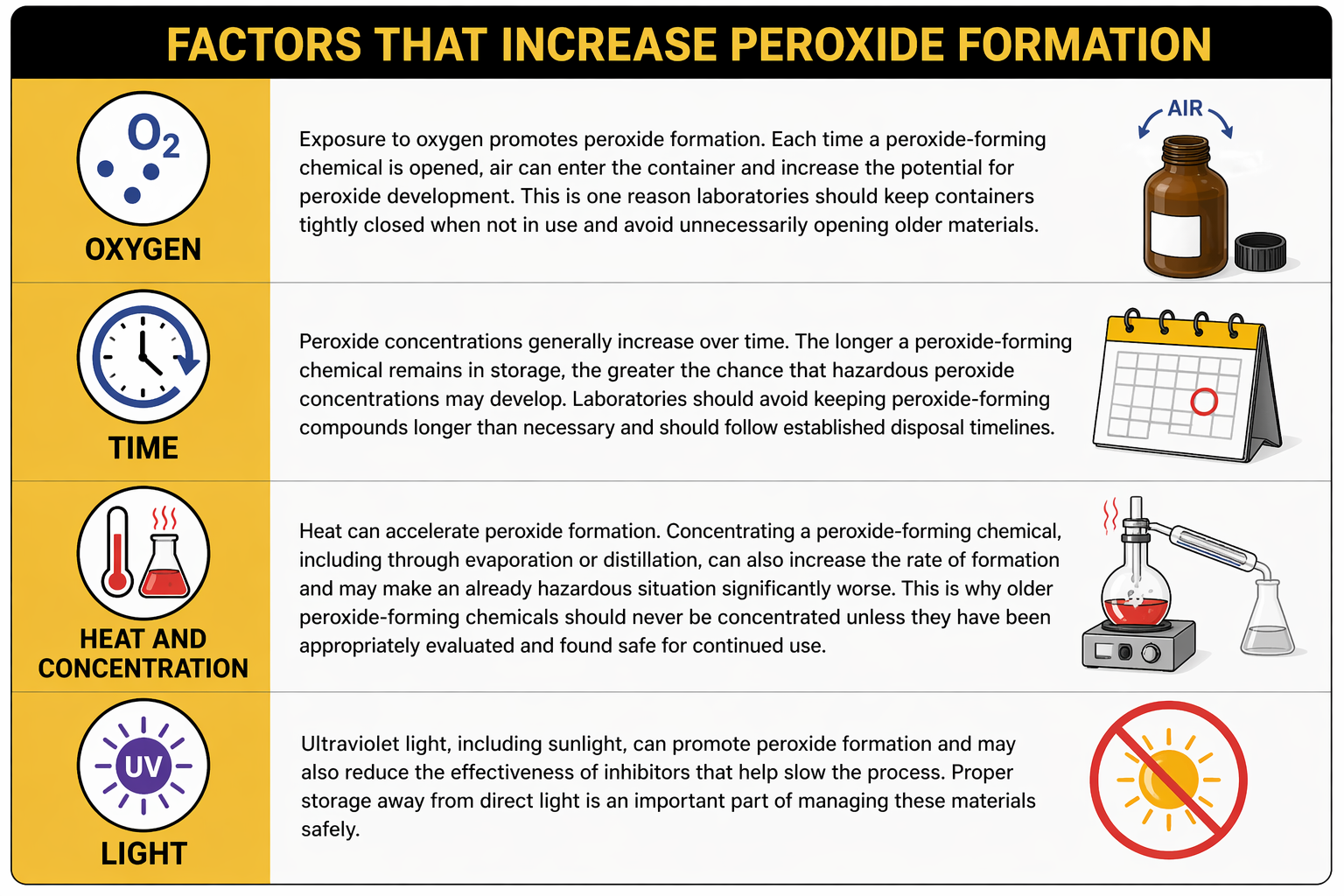
Peroxide formation is typically an auto-oxidation process, meaning the chemical reacts with oxygen over time. The rate of formation can be difficult to predict because peroxide compounds may also decompose into products that either increase or decrease future peroxide formation. As a result, the age and appearance of a container alone should never be used as the only indicator of risk.
Why This Matters in the Laboratory
A peroxide-forming compound may look normal while hazardous peroxide concentrations are developing inside the container. Over time, peroxide crystals, residues, cloudiness, or other visible changes may appear, but dangerous peroxide formation can occur even before obvious warning signs are present. Because of this, peroxide-forming compounds should be carefully labeled, visually inspected before handling, tested as required, and disposed of within appropriate timeframes.
Good Practices to Reduce Risk
University laboratories should take the following precautions when working with peroxide-forming compounds:
- Purchase only the smallest practical quantity
- Date containers when received and when opened
- Keep containers tightly closed when not in use
- Store materials in a cool location away from heat and light
- Avoid prolonged storage of older containers
- Never distill or concentrate questionable material without appropriate evaluation
- Follow required inspection, testing, and disposal timelines
When to Stop and Contact EHS
Do not move, open, test, or use a peroxide-forming chemical if you observe crystal formation, solid masses, cloudiness, floating material, unusual layering, residue around the cap, or other signs of deterioration. Secure the area and contact Environmental Health & Safety for assistance.
For help with peroxide-forming compounds at the University of Missouri, contact EHS at (573) 882-7018.
Learn More: Testing Peroxide-Forming Compounds
If you suspect peroxide formation, need testing guidance, or want to review required inspection and disposal timelines, visit the Peroxide Forming Compound Testing page.