At the University of Missouri, maintaining high-quality drinking water is essential not just for day-to-day campus operations but also for the integrity of scientific research. The Consumer Confidence Report (CCR), is an annual water quality summary that every community water system in Missouri must provide to its customers. Since the University operates its own drinking water distribution system and supplies water to most of the MU campus, it is required to prepare and distribute the annual CCR to the campus community. The CCR, which is required by the federal Safe Drinking Water Act and overseen by the Environmental Protection Agency (EPA), provides valuable information about the quality of water supplied to our campus. 

What Does the Consumer Confidence Report Include?

The CCR offers a comprehensive overview of the water quality and the potential impact of contaminants on health and safety. Key details include:

  • Source of Drinking Water:  e.g., surface water (rivers, lakes) or groundwater (wells, aquifers).
  • Contaminant Levels: A breakdown of any detected substances, such as nitrates, lead, and arsenic, with a comparison to established safety limits.
  • Contaminant Sources: Information on where contaminants may come from, like agricultural runoff or plumbing corrosion.
  • Health Impacts: Descriptions of potential risks if contaminants exceed safety standards.
  • Violations and Corrective Actions: Any exceedances of safety levels, along with steps taken to resolve these issues.
  • Compliance and Vulnerability: Details on compliance with water safety standards and the susceptibility of our water sources to contamination.

This information helps ensure that the drinking water provided on campus is safe and that MU is compliant with all applicable state and federal water quality regulations.

Why MU Researchers Should Care About the CCR

For researchers at MU, the quality of water used in experiments is more than a regulatory concern—it is integral to the reliability and accuracy of research results. The following points highlight why the CCR is a critical resource for researchers:

  1. Ensuring Experiment Accuracy:
    Even trace contaminants—such as lead, copper, or disinfection byproducts—can interfere with sensitive scientific instruments or impact the accuracy of experiments. The CCR provides specific data about these contaminants, allowing researchers to understand potential challenges in their work and make adjustments as needed.
  2. Supporting Water Purification Needs:
    For certain experiments, researchers may need to purify water further (e.g., using deionization or reverse osmosis) to meet the exacting standards of their protocols. By reviewing the CCR, researchers can determine whether additional purification steps are required to meet these needs.
  3. Protecting Research Quality:
    In fields like biomedical research, environmental science, and chemistry, the purity of water used in experiments can directly influence cell viability, data integrity, and chemical reactions. Understanding the baseline quality of campus water is essential for ensuring that research protocols yield reliable results.
  4. Compliance and Grant Support:
    Many research projects, especially those involving animal models or tissue cultures, require compliance with regulatory standards for water quality. The CCR provides crucial documentation to support this compliance, which is often needed when applying for grant funding or when demonstrating laboratory conditions during inspections or audits.
  5. Advancing Public Health and Environmental Research:
    The CCR is also an invaluable tool for researchers in public health, environmental studies, and sustainability. It offers insights into the effectiveness of the university's water treatment processes and provides real-world data for research on water safety, infrastructure, and environmental policy.

How to Access MU’s Consumer Confidence Report

The most recent Consumer Confidence Report is available online through Campus Facilities and Environmental Health & Safety (EHS). Printed copies can be requested by contacting EHS at:

Understanding the contents of the CCR ensures that your research is based on the most accurate, high-quality water possible. Whether you're working with delicate tissue cultures or running complex chemical assays, the Consumer Confidence Report is an essential tool for safeguarding the quality and reproducibility of your work. Stay informed, stay compliant, and keep your research on track with this important resource.


Whether you're a new investigator setting up your first lab or a seasoned researcher transitioning to a new space—or even preparing for retirement—clearing out or organizing a lab can be a complex and time-consuming process. Properly managing hazardous materials, ensuring regulatory compliance, and maintaining safety standards are critical steps that require careful planning. 

Fortunately, Environmental Health and Safety (EHS) provides comprehensive tools, resources, and expert guidance to streamline lab clean-outs, relocations, and closures. From chemical waste disposal to biosafety protocols, our team is here to help you navigate the process efficiently while meeting all compliance requirements. 

What You Need to Do 

Notify the Laboratory Transition Coordinator as soon as your lab assignment or relocation is confirmed. They serve as your central point of contact for all transition-related needs—coordinating lab transfers, facilitating hazmat support, and ensuring a seamless process. The sooner you notify EHS, the sooner you can begin conducting research. To remain compliant with university and federal standards, every person involved in a lab space must undergo training based on what their lab tasks will be, and more advance training is necessary for more hazardous research such as biological or radiological.   

After EHS has been notified, we will supply you with the correct information based on your transition needs. Our hazmat team works laboriously and diligently to ensure hazardous waste material is picked up in a timely and safe manner. 

Chemical Redistribution Program 

EHS helps Mizzou labs reduce waste and cut costs through its Chemical Redistribution Program. This sustainability initiative collects unused chemicals, lab equipment, and glassware from researchers who no longer need them and redistributes these materials to other university labs at no cost. By giving surplus inventory a second life, the program simultaneously minimizes hazardous waste disposal and in house lab expenses, reduces environmental impact, and supports responsible resource management across campus. Researchers interested in donating gently or unused materials or finding needed supplies are encouraged to contact EHS’s Hazmat Team to learn more about this sustainable solution for laboratory operations. 

Below, we outline key steps for new Principal Investigators (PIs) establishing a lab and departing PIs closing out their spaces. Following these guidelines will help ensure a smooth transition, minimize risks, and maintain a safe working environment for all lab personnel. 

For New PIs 
  • EHSA Access: Once registered, you and your team will gain access to the required training.  

  • Lab Setup: Ensure proper labeling and signage for hazards.  

  • Biosafety & Animal Research: Contact Biosafety at (573) 882-7018 

  • Radiation Safety: Contact Rad Safety at (573) 882-7018 

  • Chemical & Waste Management 

  • Work with the EHS Hazmat team for chemical waste disposal.  

  • Maintain an up-to-date chemical inventory. 

For Leaving/Transitioning PIs 
  • Notify EHS: Inform EHS at least six weeks before evacuation (or as soon as possible) to schedule a closeout inspection.  

  • Chemicals  

  • Gas cylinders  

  • Glassware  

  • Biological materials  

  • Radioactive materials  

  • Surplus items  

  • General trash & recycling 

  • Final Checkout 

  • Schedule a closeout walkthrough with EHS.  

Maintaining a Safe & Organized Lab 

A well-maintained lab reduces risks and improves efficiency. Follow these best practices:  

  • Label all waste containers with contents and hazard classifications.  

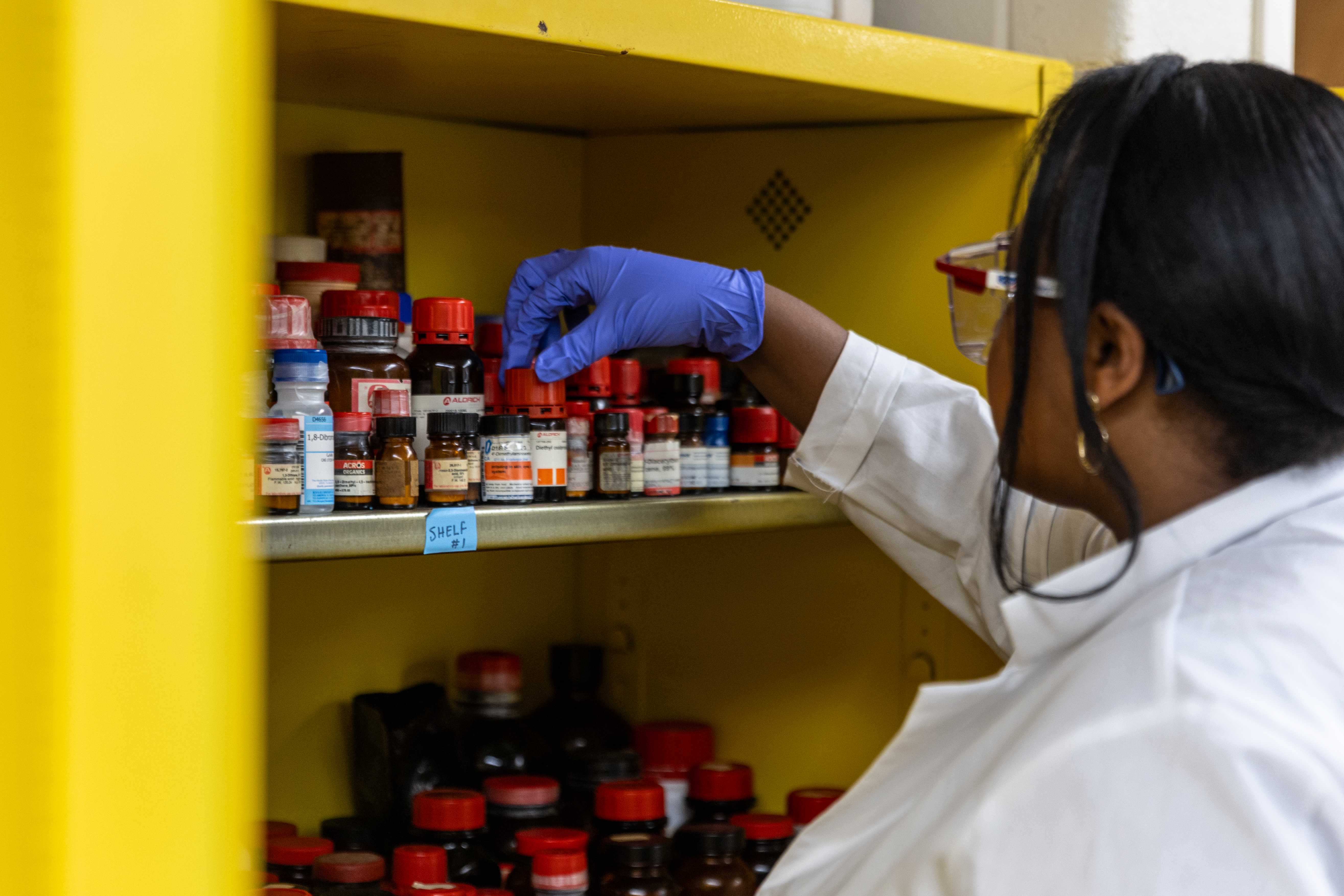
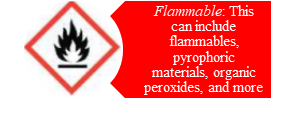
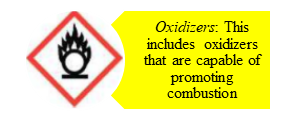
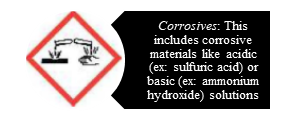
  • Segregate chemicals by compatibility (acids, bases, flammables, oxidizers).  

  • Dispose of waste according to regulations (hazardous, biological, non-hazardous). 

  • Regularly review and remove expired or unused chemicals. 

The University of Missouri Environmental Health & Safety (EHS) is updating hazardous waste labeling requirements to comply with recent EPA and MODNR regulation changes. Starting February 28, all hazardous waste containers must display the new neon green Hazardous Waste Labels. Labels must clearly indicate hazards and utilize the word Hazardous Waste.  Please retain the original accumulation start date when replacing older yellow labels. EHS staff will distribute new labels during lab visits, or they can be requested through the EHSA supply request form. For more details, visit our chemical labeling page.

Updated February 17, 2025

In April 2024, the U.S. Environmental Protection Agency (EPA) issued new regulations under the Toxic Substances Control Act (TSCA) to enhance safety measures for methylene chloride usage. These regulations prohibit many common applications, including paint stripping, degreasing, and adhesive removal, while permitting certain uses under stringent safety protocols. The University of Missouri's Environmental Health & Safety (EHS) department is actively assisting faculty, staff, and researchers in adhering to these updated standards. Departments utilizing methylene chloride must assess their inventories, eliminate or substitute prohibited uses by December 31, 2024, and collaborate with EHS for exposure monitoring and the development of Workplace Chemical Protection Plans for permitted uses. Full compliance is required by April 28, 2026.

For more details, visit the Methylene Chloride webpage.

Updated February 17, 2025

Self Directed Phone Assistance at EHS 

When you call EHS's main number (882-7018), your call will be answered by an auto-attendant service. To assist you in making the choice you need quickly (which you can enter at any time) please see the key below. Press...

  1. For questions about unwanted materials or collection of such or to reach the chemical/equipment redistribution program
  2. For assistance with shipping hazardous materials (chem, rad, bio) both on campus and offsite
  3. For other lab safety questions (general, chem, rad, bio)
  4. For safety questions not related to laboratories
  5. For environmental questions including indoor air, asbestos, lead, air/water pollution and industrial hygiene
  6. For assistance with EHSA - the Environmental Health and Safety Assistant Online Web Portal
  7. For financial or administrative issues or to reach the EHS front desk

Updated March 27, 2023

The University of Missouri's contracted and approved vendors for providing Biosafety Cabinet (BSC) certifications/repairs are Medical Technology Associates (MTA) and Allometrics

For MTA scheduling, please email Mark Zahner @ Mark.Zahner@mtausa.com

For Allometrics scheduling, please email Ben Nelson @ bnelson@allometrics.com 

Updated October 16, 2025

Subscribe to

Log in

EHS Assistant